
Arkheron Item Upgrades: Tier II and Tier III Explained
How Arkheron relic upgrades work in patch 1.0: what Tier II and Tier III add, when to buy them, and why upgrade purchases share a cooldown.
Official source: Early Access 1.0 Patch Notes ↗
Every relic ability in Arkheron has two upgrade steps. Tier II shortens the cooldown. Tier III adds an effect that the base ability does not have — extra duration, a second charge, a status application. Neither step changes the damage numbers on the tooltip, which is why players underrate Tier III and overrate raw relic rarity.
The practical question is not "which upgrade is strongest" but "which upgrade changes what I can do". A cooldown reduction gives you the same play more often. An effect addition gives you a play you did not have. In a game with four buttons, the second is almost always worth more.
Upgrades apply to echo relics too, and the echo page→ explains where those come from.
What each tier actually does
| Tier | Effect | Cost profile |
|---|---|---|
| Base | The ability as listed on the relic | Free, comes with the drop |
| Tier II | Cooldown reduced, typically by 2 seconds | Cheap, available early |
| Tier III | Adds a status, a charge, a duration or a new clause | Expensive, usually mid-run |
Tier II is a tempo purchase. Two seconds off a 15-second ability is a 13% uptime gain — real, but invisible in a single fight. Tier III is a rules purchase: it changes the interaction.
The clearest examples from the 1.0 pool:
- Gust at Tier III applies Exhaust for two seconds on each of its three gusts. Base Gust only pushes. That is not a bigger push; it is a different ability.
- Tanglefoot Trap at Tier III allows a second trap to exist. Base version destroys the old one when you place a new one, so Tier III doubles your coverage on objectives.
- Sparkle Crown at Tier III extends blind from five seconds to seven. On a four-metre radius, those two seconds are the difference between a peel and a kill.
- Flutter Step at Tier III adds 0.5 seconds of invulnerability. A teleport becomes a dodge.
- Suffering at Tier III raises the per-enemy damage bonus from 15% to 20%, which in a three-player fight is worth more than any Tier II in the game.
Notice the pattern: the Tier III upgrades that matter add a status or a defensive window. Upgrades that only raise a number are the ones to skip when Fragments are tight.
The shared cooldown rule
Patch 1.0 added two rules that change how you spend:
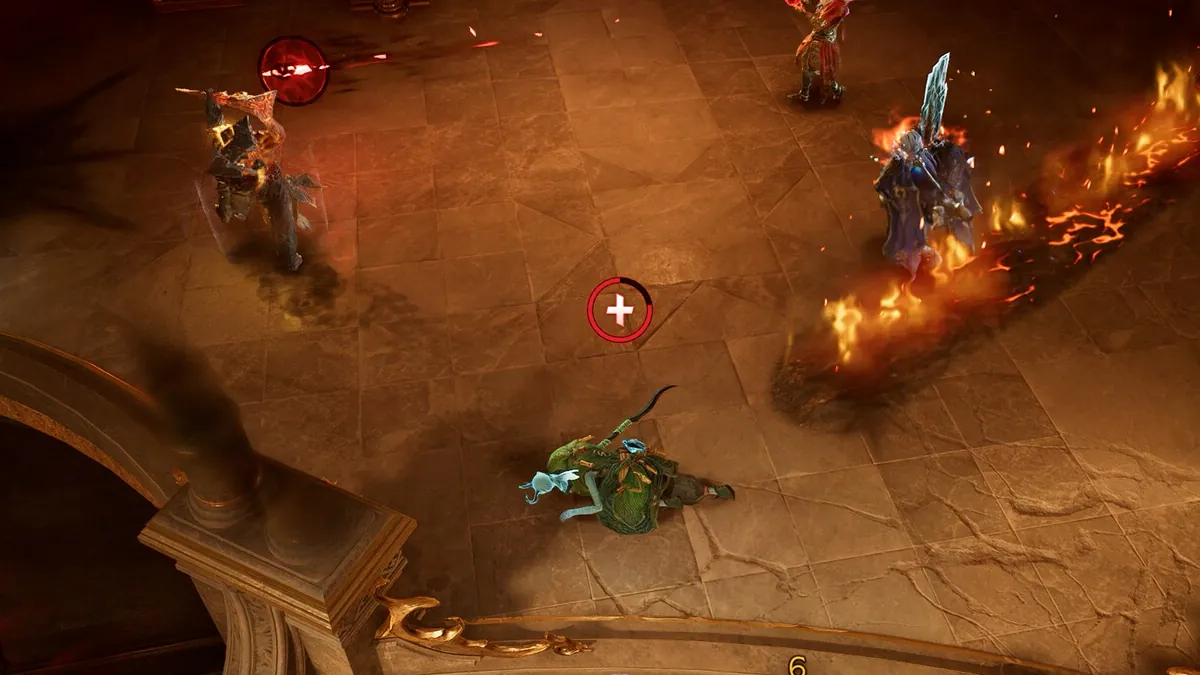
Upgrades share one cooldown. After you buy an upgrade, the next one is not immediately available. You cannot dump a full wallet into four Tier IIIs in one shopping phase; the game paces you.
Duplicate ground items share a cooldown. Picking up an item places the next pickup on a cooldown, so chain-grabbing a pile of drops is no longer free. If two relics you want are on the floor together, take the one that changes your next fight.
The intent is obvious: force a choice per floor instead of letting a rich team convert Fragments into power all at once. The consequence is that planning matters more than money. Decide your Tier III target before the shop opens.
Tier II almost always trims the cooldown. Tier III usually adds a clause: a longer root, a second charge, a cleanse. Read the clause before the percentage. Pair it with the tier list→ to see which relics justify the spend.
How to spot upgradeable loot
Three interface cues exist, and each answers a different question.
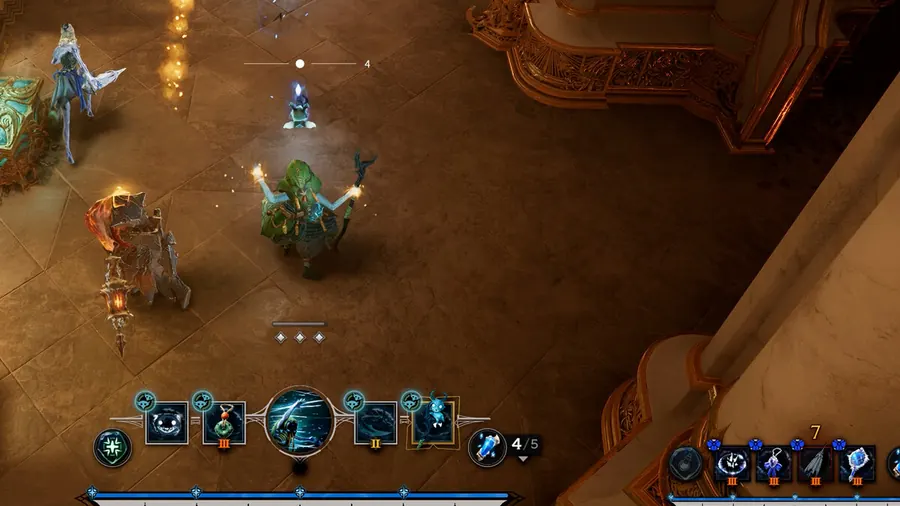
- A yellow beam on a ground item means it is upgradeable — that is, you own the base relic and can improve it. It does not mean the item is good.
- A gold frame on an equipped slot means that slot has an upgrade available.
- Holding Left Alt shows the item tooltip, including the current tier and the next tier's effect.
The yellow beam is the one to watch during a fight. A relic you already own lying on the floor is worth more than a new relic you cannot use, because the beam means a direct tier increase rather than a sideways swap.
Upgrade priority by slot
Crowns first, then Amulets, then weapons. The reasoning is that Crown and Amulet abilities are the ones with the conditional clauses that Tier III extends — invulnerability windows, Breakout, status application — while weapon Tier IIIs tend to add damage or a secondary hit.
Exceptions worth making:
Upgrade the weapon first if it is your engage. A Shasur running Twin Daggers wants Tier III on Crack the Mountain before anything else, because the stun duration is what the whole loadout is built around.
Upgrade the Amulet first if it is a trap. Trap relics gain the most from Tier III, since a second placement is a structural change rather than a stat.
Skip weapon upgrades on auto-attack builds. If your damage comes from the auto chain, weapon ability tiers matter less than survivability.
Fragments and price escalation
Item prices escalate as you buy. In 1.0 the step is 25 Fragments per purchase, down from 50, which means buying early is cheaper relative to buying late. Combined with the shared upgrade cooldown, the correct economy is:
- Buy the cheap base relics early, when escalation is low.
- Bank for the Tier III that changes your kit, not for a fourth relic.
- Do not buy a relic you will replace; the escalation cost carries forward even after the relic is gone.
Consumables sit outside this economy in a useful way: healing potions and Healing Wards cost 200 Fragments, Fortitude shards 150, and Rejuvenate 100. Those are fixed prices, so a late-game wallet is better spent on consumables than on a fourth marginal relic.
When not to upgrade
Three situations where an upgrade is the wrong buy.
You are about to transform. A four-piece set replaces your kit with the Eternal's, and the transformation is irreversible. Upgrading a relic you will lose is a wasted tier.
Your team is losing the economy. If you are being pushed off Beacons, a Tier II two seconds early will not save the floor. Buy a consumable that keeps you alive through the next fight.
The Tier III adds damage only. Damage tiers scale with how often you land the ability; status tiers scale with whether you land it at all. When you are losing, the second is more reliable.
Sources
FAQ
Do upgrades carry between rounds? Yes within a run. A new run starts from base relics.
Can I downgrade or refund an upgrade? No. Purchases are final, and the shared cooldown means a mistake costs tempo as well as Fragments.
Does Tier III change the visual effect? Usually yes — upgraded abilities get an additional effect layer, which is also a tell for opponents. Assume a Tier III ability is being tracked.